Wednesday, April 13, 2016

Michael Waddell’s Take | Spring Turkey Hunting, The Beauty Of Our God Given Right

Simple Thrill: Narrated By Michael Waddell

Bone Collector is Powered by Stone Road Media
The woods are sprawling with life during spring, and if you are familiar with hunting you know what we are talking about…turkey hunting is our beautiful god given right!
Simple Thrill: Narrated By Michael Waddell | Knight & Hale Turkey Hunting Brand Video
(video)- “For me it’s just something special about the spring time of the year… I heard a lot of people say, that really, turkey hunting is like a disease…” – Michael Waddell
As a turkey hunter you know that the feeling associated with hunting turkeys is “Indescribable.” Michael Waddell narrates our latest brand essence video and explains the “Simple Thrill” associated with chasing gobblers. Enjoy. 
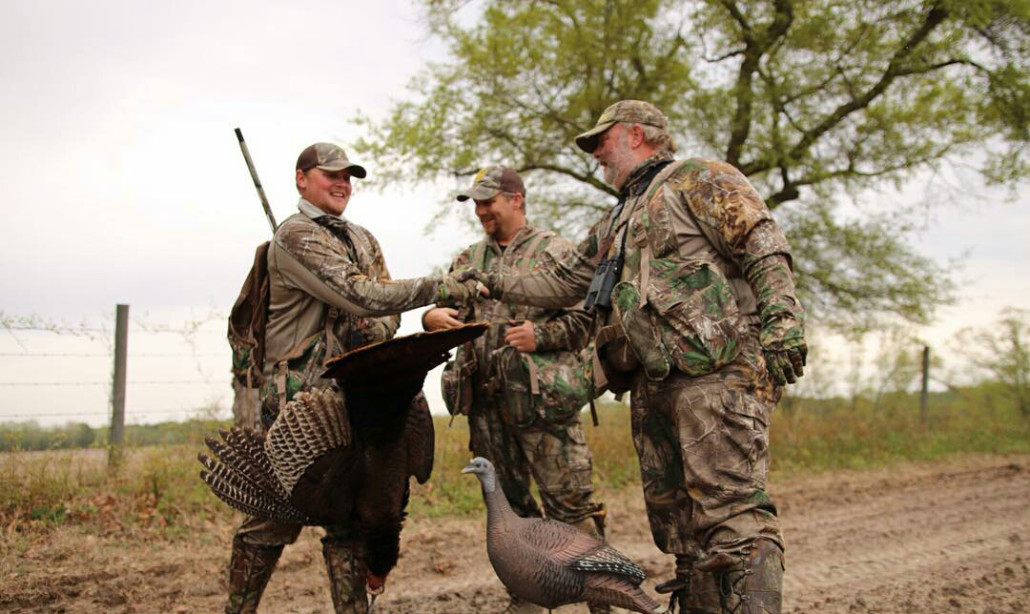
Whether you are in it for the time, the beauty, the success, or just to get away from the hustle and bustle, turkey hunting offers something for all of us. Anyone who has got the fever for hunting, god’s creation, and the outdoors is ate up with it… and it’s strong. Apart of this thrill is not only the ole longbeard gobbling, it is testing your skill,calling him in talking the talk, using decoys, spending time with friends, and at the end of the day…the success and harvest is just the icing on the cake.

The Spring Outdoor Trifecta | Turkey Hunting, Trout, and Morels

How You Can Enjoy All Three Wild Edibles

Bone Collector is Powered by Stone Road Media


Have you ever stepped into the woods filled with the hope of harvesting the spring trifecta? You probably don’t recognize it by that name, but we bet you’ve thought about all of the activities involved once the snow disappears and the temperature starts to climb.
If you’re wondering what we’re talking about when we say “spring trifecta,” it includes turkey hunting, trout fishing, and foraging wild edibles like morel mushrooms. That’s a tall order, and most would consider it a personal challenge to accomplish in a single day. It’s very easy to let the optimism of a beautiful spring morning convince you of your outdoor prowess. But finishing all three in even a single weekend can be a real challenge.
But if you can manage to do so, you can enjoy the ultimate satisfaction that goes along with taking and harvesting all three natural and renewable resources while feeding your family the perfect outdoor spring feast. If you’re up to the challenge, we’ve got the steps you should take for each activity outlined below. Study up and then get out into the woods near you for the amazing opportunity that we are privileged to have in this country. If you’re successful, you’ll also find tips at the bottom of the article to prepare your bounty and amaze whoever partakes in your feast.

Turkey Calling Guide | The What, How, and When, of Turkey Calling

Bone Collector | Fully Loaded Turkey Calling Guide

Bone Collector is Powered by Stone Road Media


Whatever level of turkey calling you are currently at, whether you sound like an eerily sounding sick, crippled hen, a near perfect lonesome lady, or a sweet sounding, seductive, fluent turkey talker, you could always use a little more practice in the final weeks before turkey season. Lucky for you, we have compiled some intensely detailed information on which type of call does what, how to use them, when to use them, and extra tips on selecting the right type of call. This is to better your turkey calling techniques and strategies, no matter what level you are at, beginner, intermediate, or advanced.

Figure Out Your Calling Level

This might be obvious to some, but harder for…well let’s face it, the hard headed turkey hunter. If you think you are an expert turkey caller, than you might want to re-evaluate and think again! How many turkeys have you killed, how many turkeys have you busted, and how good do you really sound? If you think you are that good, get you’re most successful turkey hunting buddies and put on a show…the comments might be more negative than you would have thought.
For some it might be harder to admit, but figuring out whether to label yourself at the beginner, intermediate, or advanced calling level will help you by the time you are finished with this article. From selecting the right call, to using the more advanced mouth calls in the right scenarios, and in the right tone, particular information will be more valuable to you depending on how much or how little you know.

Selecting the Right Call

There are several types of turkey calls on the market. Friction, tube, locater, and the well-known diaphragm calls all have their place among turkey hunters. Here is a quick overview of the style, when, why and how to use each call.

The Most Effective Turkey Hunting Decoy Strategies

Spring Turkey Hunting 101 | Bring on the Flop

Bone Collector is Powered by Stone Road Media


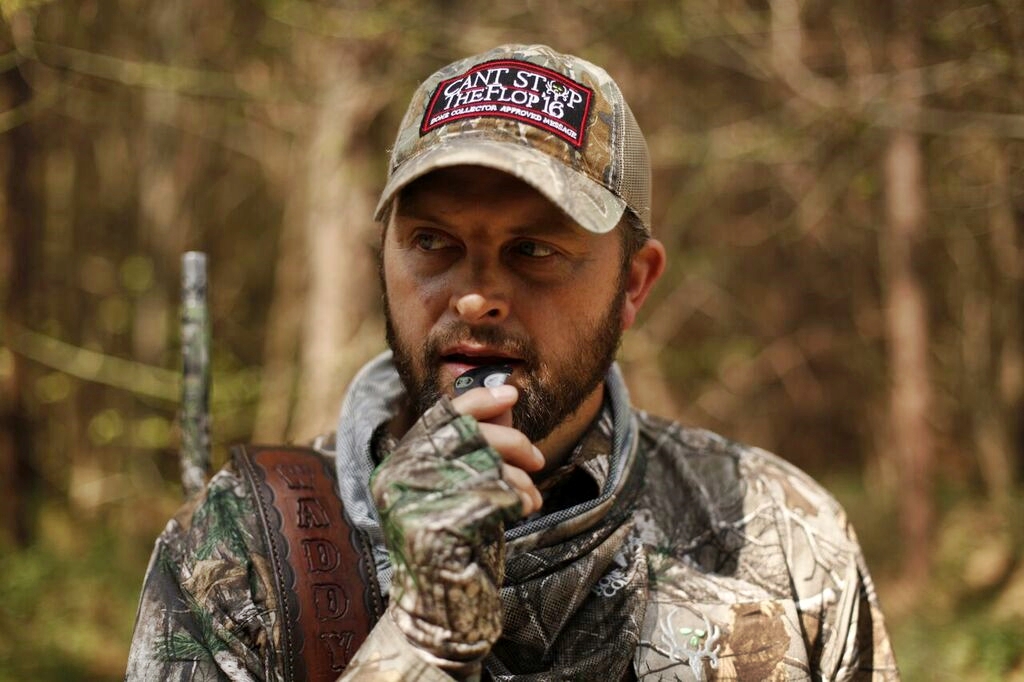
It doesn’t matter where you live in the country. The flop is coming to a field or woodlot near you. You’ve probably been seeing the #cantstoptheflop2016 campaign winging its way around the internet the last few weeks. That can mean only one thing: turkey season is coming. To celebrate this wonderful time of year, we want to explore some turkey hunting decoy strategies that are proven to work time and time again. While calling and camouflage are very important pieces of the puzzle too, effectively using decoys can make or break your day in the woods. There’s no doubt that turkeys are easier to call in when they see a “live” turkey near the commotion. By utilizing this turkey hunting guide, you too can experience the flop
Turkey Hunting Locations | Bone CollectorTurkey Hunting Seasons and Locations
First, let’s recognize that turkey seasons occur over a very wide time period across our nation. While folks down in Georgia are placing their best turkey decoys and sitting in a ground blind, hunters up in the northern Midwest states could still be out ice fishing. As a result, there’s a lot of timing variability between them. But you can still implement the turkey decoy techniques outlined here whenever your particular turkey season arrives.
The other thing to note is that turkey populations have exploded in recent years. Northern states that historically had very few, if any, turkeys have now seen dramatic increases in numbers. This opens up a new and exciting type of hunting for more hunters across our nation, who might not be familiar with turkey tactics. Use online resources to key in on your local sub-species of turkeys. Each region is a little different, so knowing the key differences could make a big impact on your success as a hunter. Now let’s discuss one of the most important turkey hunting tips for beginners: decoys!

Pre-Season Turkey Practice | Calls You Need To Learn and Master

Turkey Hunting | Calling Strategies You Should Practice Right Now

Bone Collector is Powered by Stone Road Media


How fluent are you in turkey talk? Can you effortlessly speak the language and entice lonely birds to stroll into your set? Or do you sound more like a psychotic chicken squawking away in the woods? No judgment here. But if the latter is true, the offseason is your friend. You’ll have months of down time, often with no other hunting seasons to distract you, to practice your cackles, yelps, and purrs. And if those terms sound foreign to you, you’re definitely the psychotic chicken clucking away in the woods and not seeing turkeys. Do yourself a favor and change that before next spring arrives.
Let’s start with some basic turkey vocabulary, so we’re all on the same page. Turkeys make an incredible number of vocalizations, far beyond what most people know about. They each have their own place, and it’s to your enormous benefit to know when to make each one.
Gobble – This is the most commonly associated turkey hunting call. Males gobble to attract hens and challenge other tom turkeys. You can easily produce a gobble using ahand-held call.
Cluck – This call is used in short bursts by both males and females. It is a basic “come-here” call that can be done with a slate, glass, or box call such as the Dual Threat Glass and Slate Turkey Pot Call and Switchblade 3-in-1 Turkey Box Call.
Yelp – Turkeys use yelp vocalizations for a variety of reasons. They’ll use them when they’re lonely to find other turkeys, to assemble after the flock has disbanded, and to simply comfort each other. Turkey hunters can use a slate call to make yelps, as well, which are slightly longer than clucks.
Cackle – You’re probably familiar with this call, but turkeys use it when flying down from a tree roost. It is a series of 10 to 15 short bursts that starts and ends slowly. You can use a box or slate call for a cackle.
Purr – Turkeys make purring calls to simply stay in contact as they travel in their flock. It is a short purring noise that is best done with a diaphragm mouth call.
Kee kee – Used as an alarm call, this high-pitched whistling noise consists of 3 to 4 short bursts. It is best done on a slate call to get the right W or M motion with the striker.

6 Turkey Hunting Tips and Tactics from the Bone Collectors

Turkey Hunting 101 | 6 Turkey Hunting Tips from the Bone Collectors

Bone Collector is Powered by Stone Road Media


There is no doubt about it… you #CantStopTheFlop. Every year when spring rolls around, hunters return to their neon green fields and woods, dressed head-to-toe in Realtree Camo. They are chasing the flop, and it is addicting, to some even more so than deer hunting. What makes it so enjoyable? Turkey hunting can go right, or it can go wrong fast…it’s difficult and easy at the same time, all depending on your actions. Communicating with and decoying in a Tom is extremely satisfying. Add the gobble, spit, and drumming into a hunting situation and it’s one of the most thrilling experiences a hunter will come across. The one thing about turkey hunting that we come to love is that it directly tests your ability as an outdoorsmen and turkey hunter. Do you have what it takes to kill a long beard this turkey season? Here are the top 6 turkey hunting tips from the great Beard Collectors, Michael Waddell and Nick Mundt.

Pre-Season Scouting

The turkey hunting itch begins as early as February for some. When it comes, don’t ignore it…scratch that itch! The best way is with pre-season scouting. Earlier in the year during the late winter, you will be looking for the flock. Scout food sources such as mast bearing (acorn filled) hardwood flats, cut grain fields, and pastures for tracks, droppings, and scratching. “Set up some trail cameras in some areas where you think they might be feeding“– Nick Mundt. Locating the flock with this tactic gives you the general area, but later in the year you will focus more on locating gobblers to hunt.
Take advantage of days off work, weekend days, and any hours you get free. If you’re off work on a rainy day, use it to scout! “Especially when you’re hunting eastern turkeys, rainy days means they like to come out on the fields. I don’t know if they feel more comfortable out in the open or safer out there, but that’s a good time to take a cruise around if you’ve got some open fields and find where you’ve got groups of turkeys.” -Nick Mundt.

7 Deer and Turkey Management To-Dos | Bone Collector

7 Off-Season Turkey and Deer Management To-Dos

Bone Collector is Powered by Stone Road Media


In the final days of February and on through the month of March, cabin fever can really start to set in and one one may start to wonder, “Will this winter ever end?” There are food plots to be planted, sheds to be found, and spring turkey hunting right around the corner, and just when it seems like Mr. Winter might finally be on his last leg, he finds a few more inches of snow to keep us just on the verge of insanity. Fear not! Winter does have an end and it is very near. Just beyond these last few cold, cloudy days await blood red sunsets and songbird mornings. But before they arrive, here are 7 deer management and turkey management to-dos to yield prosperous 2016 deer hunting and turkey hunting seasons!

TSI

One of most detrimental shortages a property can experience is a lack of cover. Not that the land it self is suffering, but the wildlife residing there surely is! Don’t think cover is necessary where you hunt? Here is how it works…No cover = No deer. No deer…Poor you. So, the lack of cover is a land management issue that must be addressed to ensure quality whitetail habitat and enjoyable hunting for years to come, and what better time to tackle the job than the stagnate months between deer season and turkey season?! TSI stands for timber stand improvement, and it may be the single most effective land management practice you can implement on the property you hunt. All you will need is a chainsaw and a general knowledge of tree species in your area. The latter may be more difficult to come by, so consult your local forester before taking to the saw with a chainsaw like a madman…or woman. The idea is to cut down the non-desirable trees to accomplish a number of management objectives. First, by bringing some of the forest canopy to the ground, you are providing the wildlife both food and cover.